





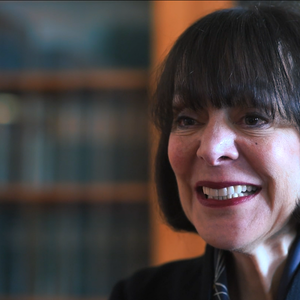
Carol Dweck
My work bridges developmental psychology, social psychology, and personality psychology, and examines the self-conceptions people use to structure the self and guide their behavior. My research looks at the origins of these self-conceptions, their role in motivation and self-regulation, and their impact on achievement and interpersonal processes.
I teach courses in Personality and Social Development as well as Motivation.
Primary Interests:
- Applied Social Psychology
- Attitudes and Beliefs
- Motivation, Goal Setting
- Person Perception
- Personality, Individual Differences
- Self and Identity
- Social Cognition
Note from the Network: The holder of this profile has certified having all necessary rights, licenses, and authorization to post the files listed below. Visitors are welcome to copy or use any files for noncommercial or journalistic purposes provided they credit the profile holder and cite this page as the source.
Image Gallery






Video Gallery

The Power of Believing That You Can Improve (TEDx talk)
Select video to watch
-
10:25 The Power of Believing That You Can Improve (TEDx talk)
Length: 10:25
-
9:38 Developing a Growth Mindset
Length: 9:38
-
47:26 The Growth Mindset (Talks at Google)
Length: 47:26
-
3:07 The Growth Mindset (Khan Academy interview)
Length: 3:07
-
3:26 The Effect of Praise on Mindsets
Length: 3:26
-
14:30 Teaching a Growth Mindset
Length: 14:30
-
40:08 On Perfectionism
Length: 40:08
-
26:32 Mindset: The New Psychology of Success
Length: 26:32
-
21:21 How to Help Every Child Fulfill Their Potential
Length: 21:21
-
1:01:43 Mindsets, Achievement, and Well-Being in Adolescents
Length: 1:01:43
-
8:17 Mindset: The New Psychology of Success (Brainwaves Video Anthology)
Length: 8:17
-
27:26 Individual and Organizational Mindset
Length: 27:26
-
5:43 Psychological Intervention: Growth Mindset
Length: 5:43
-
49:19 Leading Students Toward Contribution to Society
Length: 49:19
Books:
- Dweck, C. S. (1999). Self-theories: Their role in motivation, personality and development. Philadelphia: Psychology Press.
-
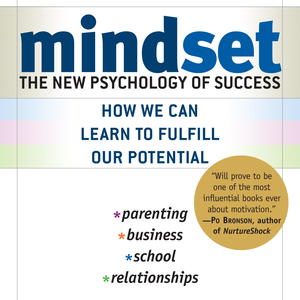
Dweck, C. S. (2006). Mindset: The new psychology of success. New York: Random House.
- Linked image: Book Cover of "Mindset"
- Elliot, A. J., Dweck, C. S., & Yeager, D. S. (Eds.). (2017). Handbook of competence and motivation: Theory and application (2nd ed.). New York: The Guilford Press.
- Heckhausen, J., & Dweck, C. S. (Eds.). (1998). Motivation and self-regulation across the life span. Cambridge: Cambridge University Press.
Journal Articles:
- Burhans, K., & Dweck, C. S. (1995). Helplessness in early childhood: The role of contingent worth. Child Development, 66, 1719-1738.
- Dweck, C. S., & Leggett, E. L. (1988). A social-cognitive approach to motivation and personality. Psychological Review, 95, 256-273.
- Dweck, C. S., Chiu, C., & Hong, Y. (1995). Implicit theories and their role in judgments and reactions: A world from two perspectives. Psychological Inquiry, 6, 267-285.
- Grant, H., & Dweck, C. S. (2003). Clarifying achievement goals and their impact. Journal of Personality and Social Psychology, 85, 541-553.
- Levy, S., Plaks, J., Chiu, C., Hong, Y., & Dweck, C. S. (2001). Static versus dynamic theories and the perception of groups: Different routes to different destinations. Personality and Social Psychology Review, 5, 156-168.
- Levy, S., Stroessner, S., & Dweck, C. S. (1998). Stereotype formation and endorsement: The role of implicit theories. Journal of Personality and Social Psychology, 74, 1421-1436.
- Molden, D. C., & Dweck, C. S. (2006). Finding “meaning” in psychology: A lay theories approach to self-regulation, social perception, and social development. American Psychologist, 61, 192-203.
- Mueller, C. M., & Dweck, C. S. (1998). Intelligence praise can undermine motivation and performance. Journal of Personality and Social Psychology, 75, 33-52.
- Plaks, J. E, Grant, H., & Dweck, C. S. (2005). Violations of implicit theories and the sense of prediction and control: Implications for motivated person perception. Journal of Personality and Social Psychology, 88, 245-262.
- Plaks, J., Stroessner, S., Dweck, C. S., & Sherman, J. (2001). Person theories and attention allocation: Preference for stereotypic vs. counterstereotypic information. Journal of Personality and Social Psychology, 80, 876-893.
Other Publications:
- Dweck, C. S. (2002). Beliefs that make smart people dumb. In R. J. Sternberg (Ed.), Why smart people do stupid things. New Haven, CT: Yale University Press.
Carol Dweck
Department of Psychology
Jordan Hall, Building 420
Stanford University
Stanford, California 94305
United States of America
- Phone: (650) 725-2421
- Fax: (650) 725-5699
